
幸福魔方
Foreign financial institutions bullish on China's hard-tech growth momentum_我的网站

A | 8月21日电 国务院新闻办公室8月21日举行“开局起步‘十五五’”系列主题新闻发布会。财政部副部长廖岷表示,下半年,还有2万多亿元地方政府专项债券和超长期特别国债待发行使用,同期而言,这个规模也是历年来较大的,能够继续保持政策强度。

B |
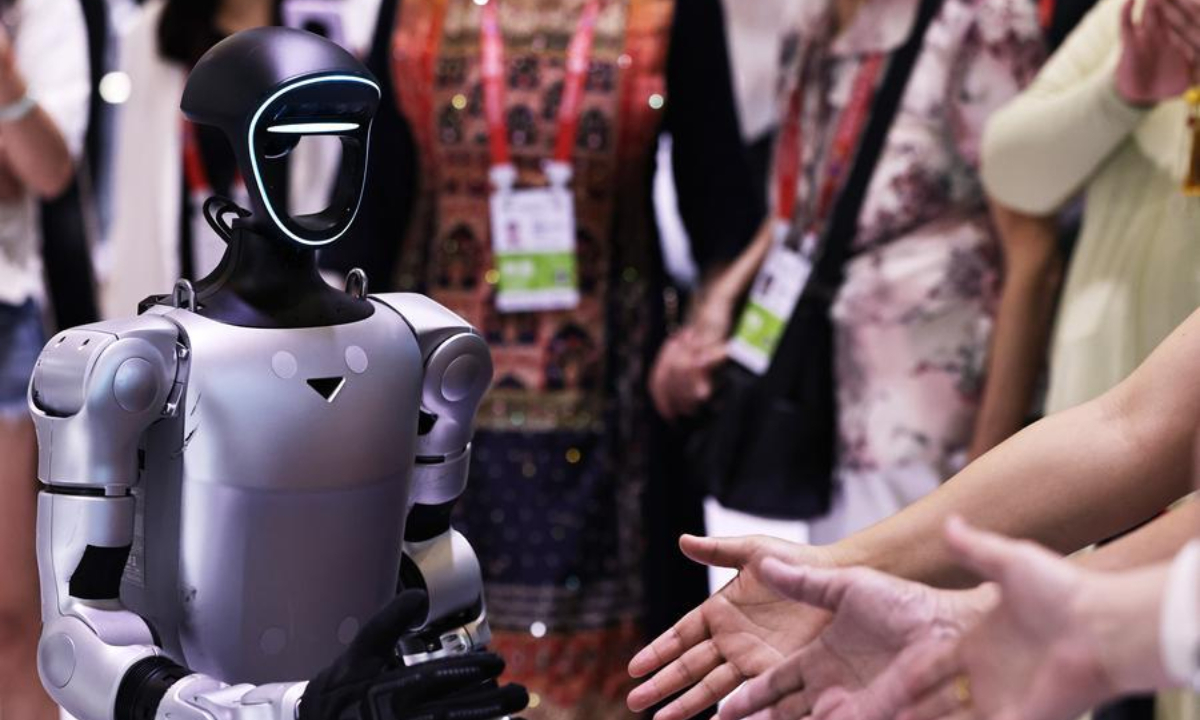
China's high-tech exports surged over 50 percent year on year in July, well ahead of the 17.8-percent growth in total exports, customs data showed. The export gains are being mirrored in investment flows, with foreign funds moving into Chinese technology stocks and global indices adding newly listed hard-tech companies.
Rob Subbaraman, head of global macro research and co-head of global markets research at Nomura, said China's low-cost and abundant electricity supply, growing talent pool and early lead in physical AI are driving the rapid development of its AI industry chain.
China's development of open-weight models could accelerate their adoption by businesses, allowing productivity gains from AI as a general-purpose technology to spread more quickly across the economy, he said, citing models from Chinese firms including DeepSeek and Moonshot AI.
"The lower cost of these models was another advantage," he said, adding that the benefits could extend beyond China, particularly to emerging markets that could adopt cheaper Chinese AI models.
China's strength in advanced manufacturing has also become increasingly evident, said Robin Xing, chief China economist at Morgan Stanley, pointing to China's roughly half share of global installed new energy storage capacity and the rapid growth in outbound licensing deals for innovative drugs. These trends, he said, underpin the long-term investment case for China's hard-tech sector and leading manufacturers.
These strengths are increasingly being reflected in foreign investors' allocation decisions. This year, Goldman Sachs has twice raised its 12-month target for the CSI 300 on improving earnings momentum, and retained an overweight view on Chinese equities.
Kinger Lau, chief China equity strategist for Goldman Sachs Research, said the bank's positive view reflected improving earnings momentum, favorable macroeconomic and liquidity conditions. A-share equities offered international investors diversification benefits that remained underappreciated, along with attractive exposure to hard-tech and AI themes, he added.
Individual companies are drawing overseas interest too.
ChangXin Memory Technologies surged 465.82 percent on its debut on Shanghai's STAR Market last month, reaching a market capitalization of more than 3.2 trillion yuan (about 471.28 billion U.S. dollars).
U.S.-based Tema ETFs made the chipmaker a top holding at a 10.56 percent weight on its debut day, while MSCI officially added it to its China All Shares Index on Monday under a fast-track rule for large IPOs.
Robotics is where the enthusiasm is most visible. Unitree, set to become China's first mainland-listed humanoid robot maker, priced its Shanghai IPO at 150.8 yuan a share, representing 10 percent of its post-offering share capital. The offering is expected to raise about 6.1 billion yuan in gross proceeds.
That optimism, however, exists alongside broader economic pressures. Nathan Chow, senior economist at DBS Bank, said the imbalance between relatively strong supply and weak demand remained pronounced, with household consumption and some companies' profitability still under pressure.
Investment in infrastructure could help offset the weakness in private investment in the near term, while lowering logistics and energy costs and improving the efficiency of resource allocation over the longer term, Chow said. It could also strengthen supply chains and reduce the economy's exposure to external shocks and geopolitical risks, he added.
The implementation of policy measures would be key to sustaining the recovery in the second half of this year, analysts noted.
Economic management requires both easing the brakes and stepping on the accelerator, said Song Yu, chief China economist at UBS Securities, adding that faster fiscal spending and the use of bond proceeds, additional policy support and better coordination between fiscal and financial policies are needed, alongside measures to remove barriers to household consumption and improve the business environment.
"With stronger policy support and measures taking effect, China's economy is expected to maintain a steady recovery in the second half of the year," Chow said.
。将抓紧指导地方组织好债券发行,加强项目前期准备,推动项目尽快开工建设,形成更多实物量。同时,重点在三个方面继续发力提效。

C | 一是加快资金使用。

D | 合理加快财政支出进度,对支出进度持续偏慢的地区加强督导,提高资金使用效益。及时分配下达相关补助资金,加速民生政策落地。 二是加力扩大内需。优化实施财政金融协同促内需一揽子政策,更大力度激发民间投资和促进居民消费。

E | 今年下半年还有新的政策要推出,配合相关部门继续发挥新型政策性金融工具作用,支持重大项目建设。发行3000亿元特别国债支持有关中央金融企业补充资本,引导提升服务实体经济能力。 三是加强财政改革管理。落实财税体制改革新举措,推动零基预算改革,强化预算绩效管理,提升财政科学管理水平。

F | 继续抓好地方政府债务风险防范化解,严防新增隐债、虚假化债。

G | 另外,关于增量政策,下半年根据宏观经济运行情况,财政部将及时谋划出台务实管用的增量政策,为实现经济质的有效提升和量的合理增长提供有力支撑。
Current article:http://rz1d.qixicuorenchouzuan.buzz/lel/ey0.html
Published on:00:00:00
相关新闻
- 国际空间站掉下来的垃圾,把人家房子砸了个窟窿?!
- 凰家看台丨什么才是世界杯的最终答案?
- 曲江文旅2026年上半年净利润681.28万元,扭亏为盈
- 小米玄戒O100推倒内存墙:实现真正的近存计算
- “福彩相伴·喜耀全城”——温州福彩即开票试刮擂台赛圆满结束
- 机器人跳舞太激烈被当众扒裤子散热!网友:给孩子留点隐私吧
- 高速だって走れちゃう! 車検不要でコスパもグッド “普通二輪AT限定免許”で楽しめるホンダの個性派「軽二輪スクーター」3選
- 【ワークマン】スマホよりも小さくて薄いミニ財布!本革っぽいから980円には見えない!お札は折らなくてOK
- 市领导会见中铁九局集团党委书记董事长张文杰一行
- 习近平对西藏日喀则市吉隆县遭受泥石流灾害作出重要指示
最后更新
- 江西银行回应“爱她就贷她回家”:本行没有“彩礼贷” 将依法维权
- 欧洲央行执委称须进一步加息,通胀恐长时间高于2%
- How a 'Three-Body' fan became China’s award-winning sci-fi writer
- Xi urges advancing socialism with Chinese characteristics on birth centenary of late leader Jiang Zemin
- 【品种策略】鸡蛋:08月26日多家期货公司晨报观点汇总
- 骑士1换2交易达成!生涯第12支球队!历史第二....
- 惠州双色球大奖得主现身领奖
- 취임 1년 맞아 기자회견하는 장동혁 대표
- 政府取消全面降低限速的规定,学校周边的道路呢?
- Token价格必将走向分化?专家:高质量Token永远值钱
热门新闻
- 法国谋求“地缘政治独立性”心有余而力不足(观象台)_欧洲_战略
- 文班亚马谈回归国家队:既陌生又享受赛场氛围
- 告别打怪刷本!米哈游生活模拟游戏《星布谷地》官宣2026年冬季上线
- 痛风糖果竟掺处方药废料,每盒成本仅7.48元,终端零售价卖到598元,涉事企业被罚没款3.8亿余元,责任人被追究刑事责任
- 赵龙主持召开企业座谈会
- Former SS guard, 98, charged as accessory to murder at Nazi concentration camp
- 舒马赫8块藏表售出410万欧,科琳娜为救夫已变卖9000万欧家产
- 黔南州22岁小伙陆佳豪在篮球赛中突然倒地后离世,陆父:孩子倒地半个多小时后,才有急救车辆到现场处置;目前家属已接受18.8万元赔偿方案
- AI 给人制造了一种“离商业很近”的错觉
- 新生支付未经同意扣我199元,申请退款及关闭全部扣款渠道